For Shwetambar Murtipujak (Deravasi) families
Shwetambar Murtipujak Jain Matrimony
जय जिनेन्द्र
From the derasar on your street to Palitana's hill of temples, Shwetambar Murtipujak families keep the Jina close — in puja, in the angi on festive days, in the Navkar Mantra at dawn.
Jai Jinendra Matrimony is a home for every Shwetambar Murtipujak family — Gujarati, Marwari and Kutchi, in Mumbai, Bengaluru, Chennai or abroad — with your community and sect on your profile, and your gotra and gaccha in your own words.
Communities welcomed
Oswal — Halari Visa Oshwal, Kutchi Dasa Oswal, Kutchi Visa Oswal, Vagad Visa Oswal — Porwal (Porwad), Shrimal (Shrimali), Humad, Nema, Palanpuri Jain, and more.
Gacchas welcomed
Tapa, Kharatar, Anchal, Parshwachandra and the other gacchas, and families who simply say Shwetambar.
Tirthas held dear
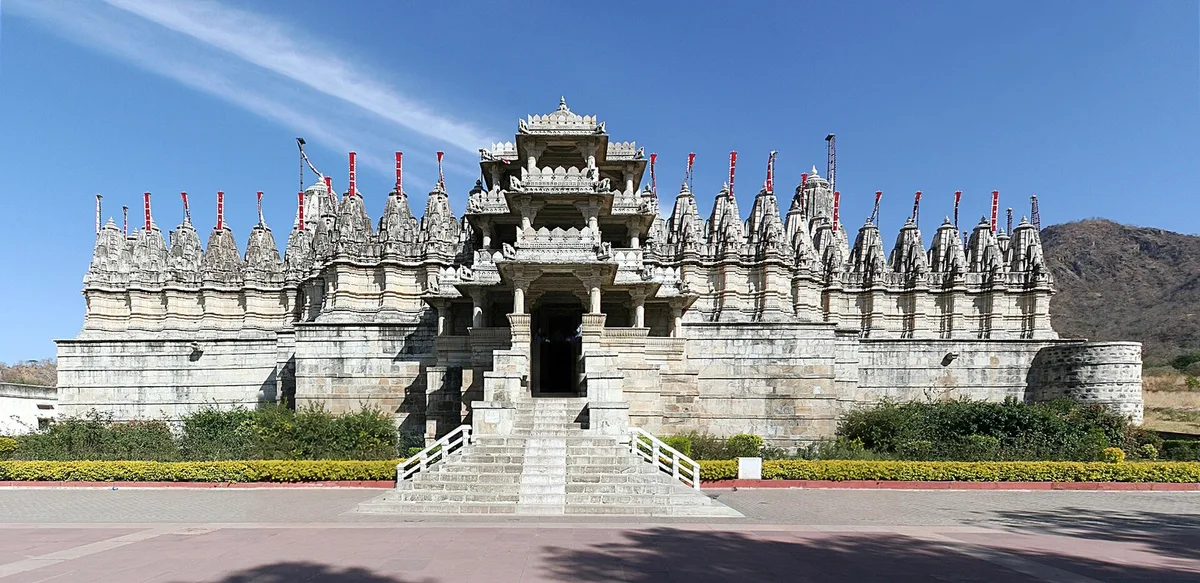
Shatrunjaya at Palitana, Girnar, Ranakpur, Dilwara at Mount Abu, Shankheshwar, Kulpakji in Telangana, and Sammed Shikharji.
The Murtipujak tradition
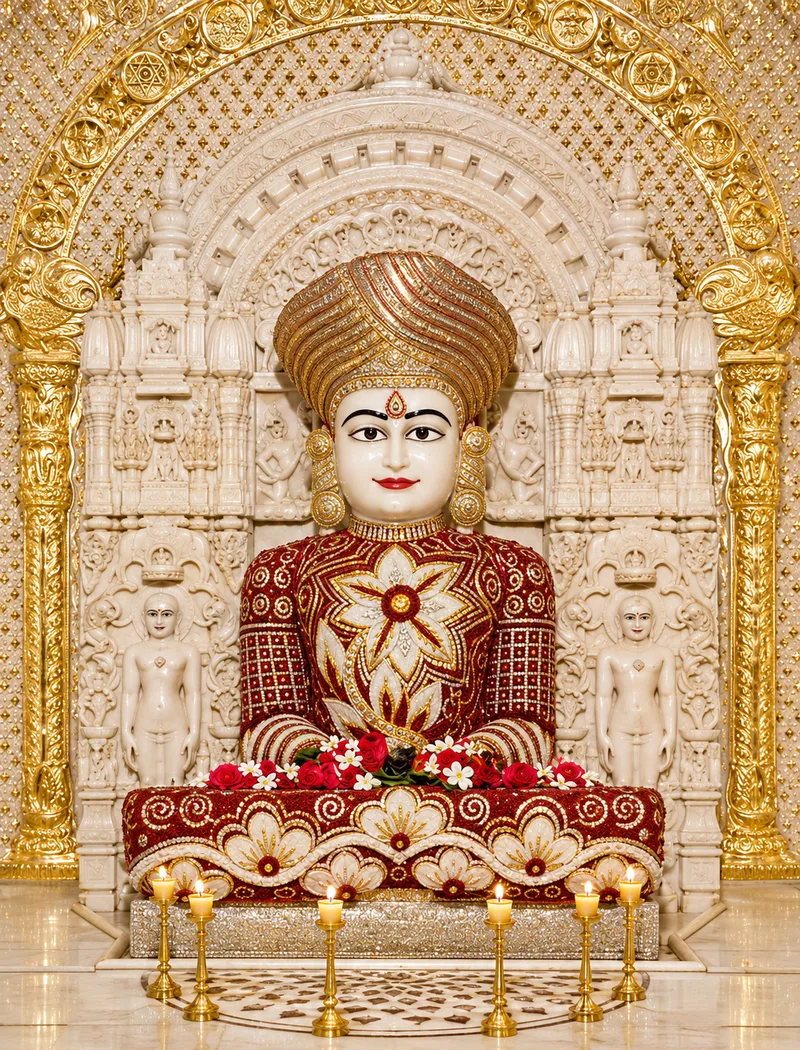
Murtipujak means "image-worshipper": families worship the Tirthankara's image in the derasar (temple), and on festive days the image is adorned with angi. Monks and nuns wear white, which gives Shwetambar — "white-clad" — its name.
The Murtipujak tradition, also called Deravasi or Mandir Margi, has its gacchas — Tapa, Kharatar, Anchal, Parshwachandra and others. Acharya Hemachandra of twelfth-century Gujarat is among its most revered teachers.
Communities
Many Oswal families — among them the Halari Visa Oshwal, Kutchi Dasa Oswal, Kutchi Visa Oswal and Vagad Visa Oswal — and many Porwal (Porwad), Shrimal (Shrimali), Humad, Nema and Palanpuri Jain families keep this tradition, in Rajasthan, Gujarat, Kutch, Mumbai and wherever they have settled — from Chickpet in Bengaluru to Antwerp and Nairobi.
In 2024 the Kutchi Jain groups agreed to welcome marriages across their sub-groups; here, each family names its own community and chooses whom it wishes to see.
Tirthas held dear
Shatrunjaya at Palitana, Girnar, Ranakpur's marble Chaumukha temple, the Dilwara temples at Mount Abu, Shankheshwar Parshvanath, Kulpakji in Telangana — and Sammed Shikharji, revered by every Jain family.
How your profile reads here
- Sub-community — your own community, chosen from the list, or "Other Jain community" in your own words.
- Sect — chosen from the list: the tradition first, then the panth or branch.
- Gotra or family name — optional, written in your own words.
- Dietary preference — choose Jain, and families who eat the same way will see it.
- Horoscope — birth details, nakshatra and rashi are part of every profile; Ashta Koota compatibility is there for families who match kundli.
FAQ
Common questions from Shwetambar Murtipujak families
Will we see only Shwetambar families?
Jai Jinendra Matrimony is for Jain families of every tradition. Your search can be narrowed to Shwetambar Murtipujak families — and to your own community, such as Kutchi Visa Oswal — with the Sect and Sub-community filters.
Can we mention our gaccha?
Yes — write it in the About me part of your profile, the way your family says it. The sect line itself reads "Shwetambar – Murtipujak (Deravasi)".
Can we find families who keep Jain food?
Yes. Choose Jain as your dietary preference and it shows on your profile; in Matches, the Diet habits filter shows families who chose Jain too, and your partner preferences tell other families what matters to yours. There is no separate chauvihar question — if your family keeps it, say so in About me.
Will our phone number be visible to everyone?
It is not shown openly on your profile. A member who wants to take an introduction forward can see your contact through the app's Reveal Contact feature and reach you directly, and Government-ID-verified badges help you know who you are speaking with.
Every Jain tradition is at home here
Begin your family's search, with trust and dignity
Every profile you see and contact belongs to a Jain family. Phone numbers are never shown openly.
Register / Login